
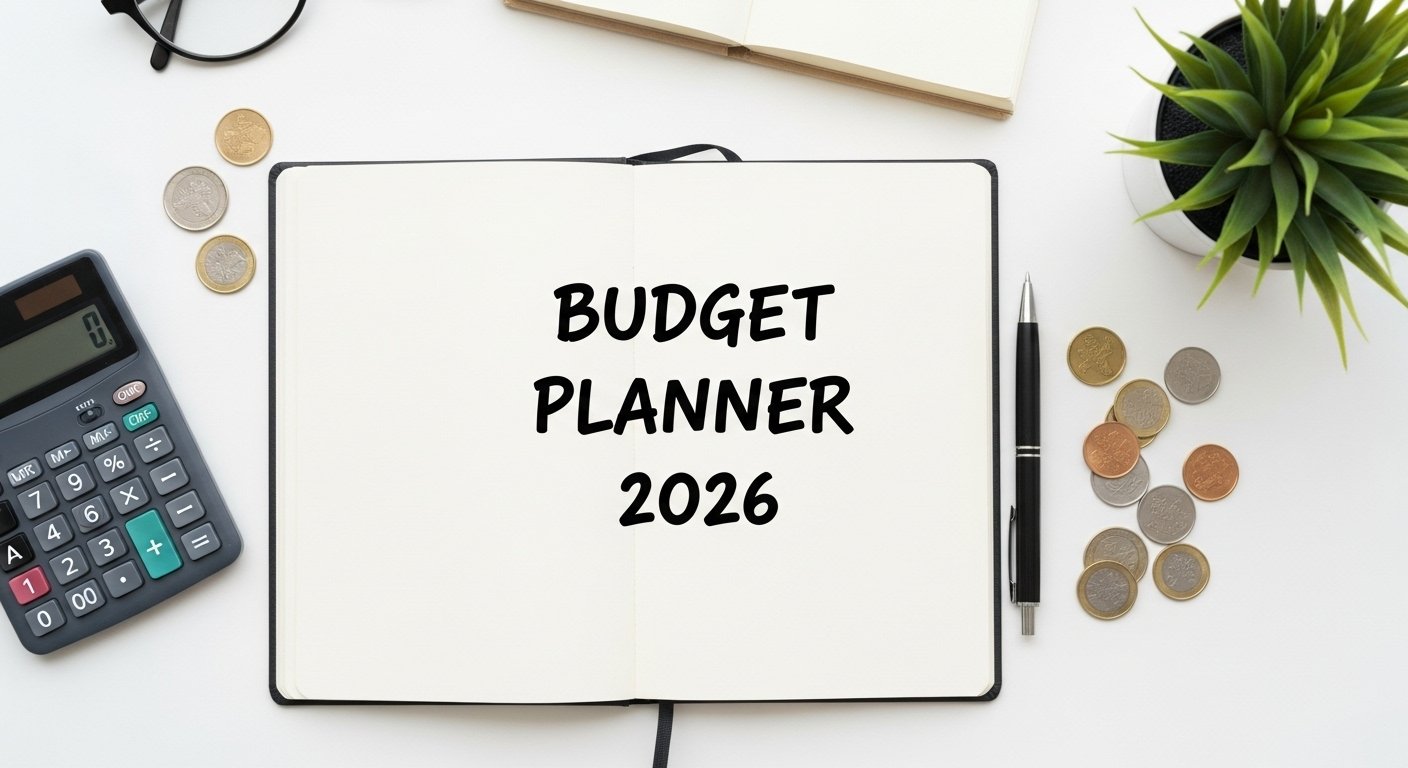
A budget planner is a strategic tool, either digital or physical, designed to record income, categorize expenditures, and track progress toward financial goals.
Unlike a simple ledger, a planner proactively assigns every dollar a specific job before the month begins, ensuring that spending aligns with your long-term priorities rather than momentary impulses.
- A planner provides a structured visual roadmap for income versus expenses.
- Zero-based and 50/30/20 are the most effective layouts for beginners.
- Consistent tracking reveals “money leaks” usually hidden by auto-pay habits.
- Digital apps and printable templates both serve specific psychological needs.
1. What is a Budget Planner?
A budget planner acts as a centralized dashboard for your entire financial life.
It functions beyond a basic list of bills; it is a forward-looking system that helps you forecast future cash flow and identify potential deficits before they occur.
Core Components
Effective planning systems contain three non-negotiable elements: accurate income projections, fixed expense categories, and variable spending limits. Without these, the system fails to provide actionable data.
2. Why You Need a Planner
Using a planner eliminates financial anxiety by replacing guesswork with data-driven decisions.
When you document your finances, you gain immediate clarity on where your money goes, allowing you to redirect funds from wasteful subscriptions to wealth-building activities like investing or debt repayment.
Breaking the Paycheck-to-Paycheck Cycle
Many individuals earn sufficient income but lack retention strategies. A structured plan highlights the gap between needs vs. wants, making it easier to build an emergency fund. According to the Consumer Financial Protection Bureau, consumers who actively monitor their cash flow are statistically less likely to experience financial hardship during economic downturns.
3. Choosing the Right Format
The best format is simply the one you will use consistently without friction.
While some prefer the automation of software, others retain information better through the tactile act of writing.
| Method | Best For | Key Feature |
|---|---|---|
| Zero-Based | Detail-oriented planners | Every dollar is assigned a job until the total is zero. |
| 50/30/20 Rule | Beginners & Simple Spenders | Allocates income by percentage (Needs, Wants, Savings). |
| Envelope System | Overspenders | Uses physical cash for variable categories like groceries. |
4. How to Create Your Plan
You create a plan by calculating total net income and subtracting fixed obligations first.
This specific order ensures that your “four walls”—housing, utilities, food, and transportation—are secured before you allocate money to entertainment or luxury items.
Step 1: Calculate Net Income
List all revenue streams after taxes. If you have an irregular salary, use the lowest average monthly income from the last year to remain safe.
Step 2: List Fixed Expenses
Write down rent, insurance, and loan payments. These numbers rarely change and form the foundation of your planner.
Step 3: Set Variable Limits
Estimate spending for groceries and gas. For a detailed breakdown, review our guide on creating a monthly budget.
5. Tools and Resources
Digital tools offer automation, while printable templates offer customization and focus.
Connecting your bank account to an app can categorize transactions automatically, saving time on data entry.
- Spreadsheets: Excel or Google Sheets allow for infinite customization and complex formulas.
- Apps: Mobile applications provide real-time alerts when you near a category limit. Check out our list of the best free tools for beginners.
- Notebooks: Simple pen and paper methods reduce screen time and enforce mindfulness.
For reliable advice on saving strategies, the U.S. Securities and Exchange Commission offers free educational resources for individual investors.
Conclusion
Implementing a budget planner is the single most effective step toward financial literacy. Whether you choose a digital app or a simple notebook, the act of planning transforms money from a source of stress into a tool for achieving your dreams. Start today by tracking just one week of expenses to see where you stand.
Frequently Asked Questions
1. Is a budget planner free?
Yes, many planners are free. You can use pen and paper, free spreadsheet templates like Google Sheets, or the free versions of mobile apps to manage your finances effectively without cost.
2. How often should I update my planner?
Yes, you should update it weekly. checking your planner once a week ensures you catch overspending early enough to adjust your behavior before the month ends.
3. Can a planner help me get out of debt?
Yes, a planner is essential for debt reduction. It identifies “extra” money in your cash flow that can be applied to debt payments using the snowball or avalanche method.
4. What if I exceed my budget limits?
No, you do not need to panic. If you overspend in one category, simply move money from another category to cover the difference, a practice known as “rolling with the punches.”
Sources
- Consumer Financial Protection Bureau. (n.d.). Budgeting Tools and Advice. Consumerfinance.gov.
- U.S. Securities and Exchange Commission. (n.d.). Savings and Investing. Investor.gov.